Japanese-Americans in Steinbeck Country
Now farming became industry, and the owners followed Rome, although they did not know it. They imported slaves, although they did not call them slaves: Chinese, Japanese, Mexicans, Filipinos. They live on rice and beans, the business men said. They don't need much. They wouldn't know what to do with good wages. Why, look how they live. Why, look what they eat. And if they get funny, report them.
The Grapes of Wrath, John Steinbeck
The first Japanese person to step foot in Monterey County was Otosaburo Noda. Although he never settled there permanently, he was a key part of bringing over laborers from Japan to work in the salmon and abalone industries, and assisted in bringing Japanese farmers to the area, establishing the first Nikkei in the area. Noda wrote to Japan's Ministry of Agriculture about the "carpet of abalone" in Monterey. The Ministry sent Gennosuke Kodani of Keio University to the peninsula in 1897, and in 1898, Kodani started the Point Lobos Cannery Company with Scottish-American, Alexander Allan.
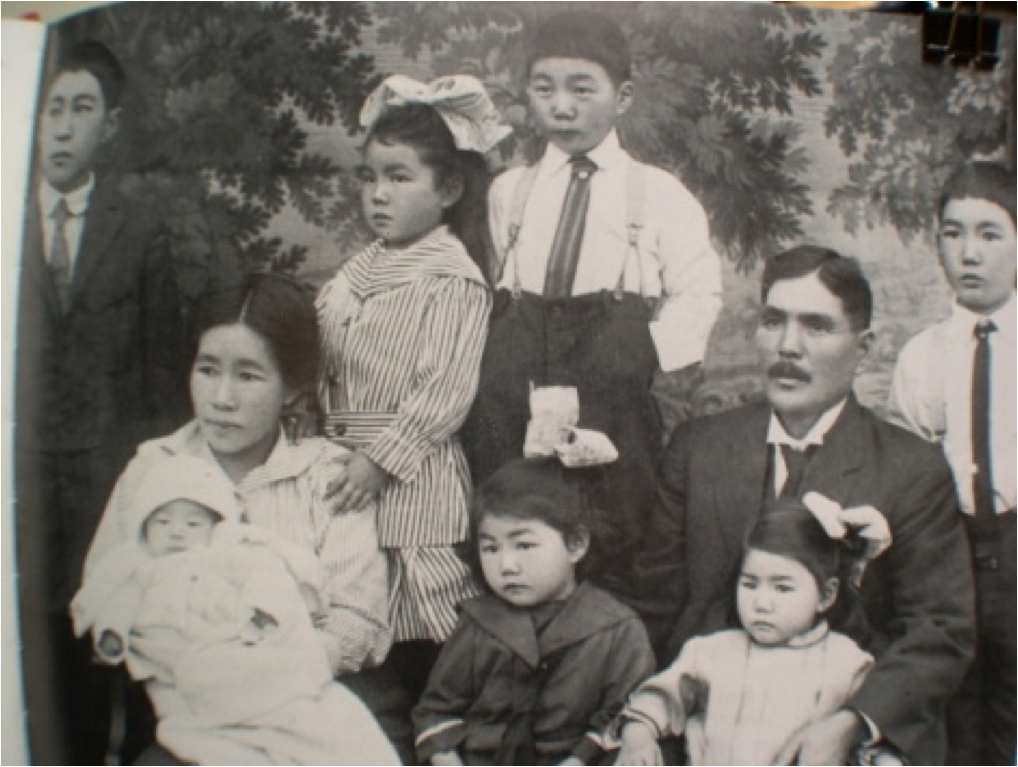
Noda established a Japanese colony on Monterey's waterfront between Del Monte Avenue and Alvarado Street, and with his and Kodani's efforts, a steady stream of Japanese immigrants arrived to build a thriving community of fishermen, divers, business owners, and other service workers. In 1902, Noda and the American, Harry Malpas, opened the first cannery in the area, Monterey Fishing and Canning Company, on Ocean View Avenue, which would become locally known as Cannery Row (and after the popularity of John Steinbeck's 1945 novel, Cannery Row, it would be officially renamed such). The canneries that would line the avenue mostly hired Japanese and Sicilian workers, whose children would play baseball together at nearby Jacks Park. The kids were so close, they even learned eachother's familial language before English, and their families exchanged food for holidays.
The bulk of the abalone harvested in the area was sent to Japan, but after German restaurateur "Pop" Ernest Doelter developed a weinerschnitzel-inspired cooking method that took California by storm, he started purchasing abalone from Japanese divers to stock his restaurant. The restaurant's bay-facing porch was strung with Japanese paper lanterns that guests said provided a "festive" feel.
Although racist business owners and saboteurs sank Japanese fishing boats and tried to push Japanese farmers off of the land in the early 20th century, many accounts of what became a Japanese-dominated wharf after 1915 speak of the small city, with a population of 1,700 in 1900 that would grow to just over 10,000 in 1940, as a vibrant and multicultural community. There was not the type of competition that drove Japanese farmers from the Central Valley; Japanese workers specialized in salmon and abalone, Portuguese workers specialized in sardines, etc, so the different ethnic groups didn't benefit from undermining eachother. As a result of this cooperative and tight knit cross cultural community, Monterey had the only California-based multiracial fisherman's union in the early 20th century.
This is the first piece in my series of features on Nikkei, the Japanese diaspora. If you want to keep up with further additions, please subscribe!
Alien land laws prevented persons of Japanese descent from purchasing property, but many white business owners acquired loans for their Japanese friends and employees and purchased land and buildings on their behalf.
Most of the Nikkei of Monterey were very patriotic and often displayed American flags outside their homes. In 1938, they came together to create a 2,800 square foot American flag that they carried during Fourth of July parades. However, despite this patriotism and the cross-racial friendships in Monterey, the festering anti-Japanese sentiment grew into a fervor after Pearl Harbor, and the center of the blaze was John Steinbeck's own hometown and the setting of East of Eden: Salinas.
Edward M. Seifert and Austin E. Anson of the Grower-Shipper Vegetable Association took advantage of the hatred to push for their long-planned scheme to remove Japanese growers and farmworkers from the Salinas Valley. They appealed to the various organizations and the federal government, asserting that even though some Japanese were loyal to the US, they could not be told apart from potential spies and saboteurs, and so should all be removed for the safety of all.
I am fully aware that the American born Japanese has just as much rights under the Constitution as I have or you have, but certainly something can be done to remove the threat that hangs over our heads and also, to protect that same Japanese who has American citizens' rights.
What can we do to help you to get fast action through Congress, if necessary, to interne all Japanese?
-E.M. Seifert, Jr in a letter to Congressman J.Z. Anderson, January 16, 1942
In February of 1942, Executive Order 9066 tore the Nikkei population from Monterey, with all persons of at least "one-sixteenth" Japanese descent in the county taken to the Salinas Rodeo Grounds for processing before being transported to incarceration camps. For three years, 120,000 persons of Japanese descent and a few non-Japanese friends and family members were imprisoned for the crime of existence.
Before the war had even ended, a group that called itself the Monterey Bay Council on Japanese Relations pushed to prevent the return of Japanese-Americans to the county. Seifert and others of the council published advertisements discouraging the return of the incarcerated Japanese-Americans across regional newspapers. One of these ads, anonymously published in the Monterey Peninsula Herald, sparked an outcry from friends and associates of Japanese-Americans.
Multiple groups and individuals wrote their own letters to the editor and various missives, decrying the racist ad and the Herald's choice to run it as supporting "forces of bigotry, prejudice and selfishness" and "un-American". Ed Ricketts, marine biologist and Steinbeck's inspiration for the character Doc in Cannery Row, equated the racist attitude in the ad to that of Hitler in his own letter to the Herald.
The ad and the resulting backlash was widely discussed in the Poston, Arizona incarceration camp. Mariko "Mollie" Sumida wrote a response from her prison while her husband Yukio fought in Italy as part of the 442nd Regimental Combat unit.
Some day when the war is over, we want to return to Monterey with our little son. I want to thank the people of Monterey who wrote to The Herald to defend us. I know as long as there are people like that left in this country all of the Nisei boys did not die in vain.
Many of those who wrote furious letters to the editor showed their support of the peninsula's Japanese community by circulating a petition for a counter-ad. Over 440 signatures were collected for a full page ad that welcomed the displaced community members back home, including the famous pencil signature of John Steinbeck.
Even before the petition effort, Steinbeck voiced his disgust at the US's treatment of Japanese-Americans. According to historian Susan Shillinglaw in A Journey Into Steinbeck's California, Steinbeck told a US Intelligence officer that most of the Japanese persons of the West Coast were "inherently loyal citizens". And although John Steinbeck scarcely returned to the peninsula after The Grapes of Wrath, having fled after threats from the big landowners and businessmen who took offense to his depictions of them in his work, Salinas and the rest of Monterey County have embraced the controversial author as part of the area's heritage.
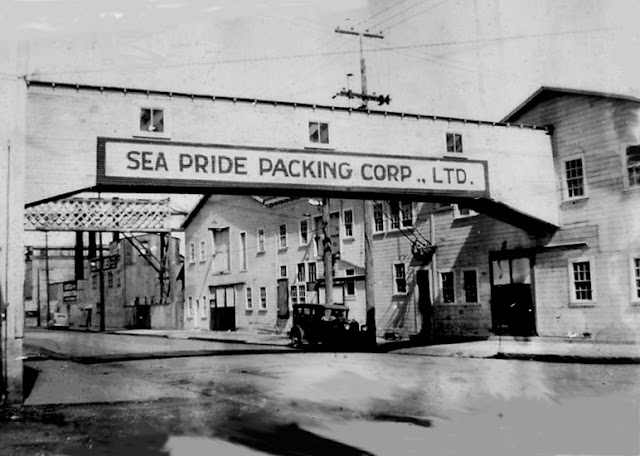
Many of Monterey county's Japanese community members did not return after they were released from the camps, but the Monterey chapter building of the Japanese American Citizens League was protected by Monterey's mayor, Carmel Martin, and restored to the community upon their return. Those who did return included Tsunetaro Oda, one of the co-founders of the entirely Japanese-American owned and operated, Sea Pride Packing Corporation, also known as the grandfather of Monterey JACL board member, Larry Oda.
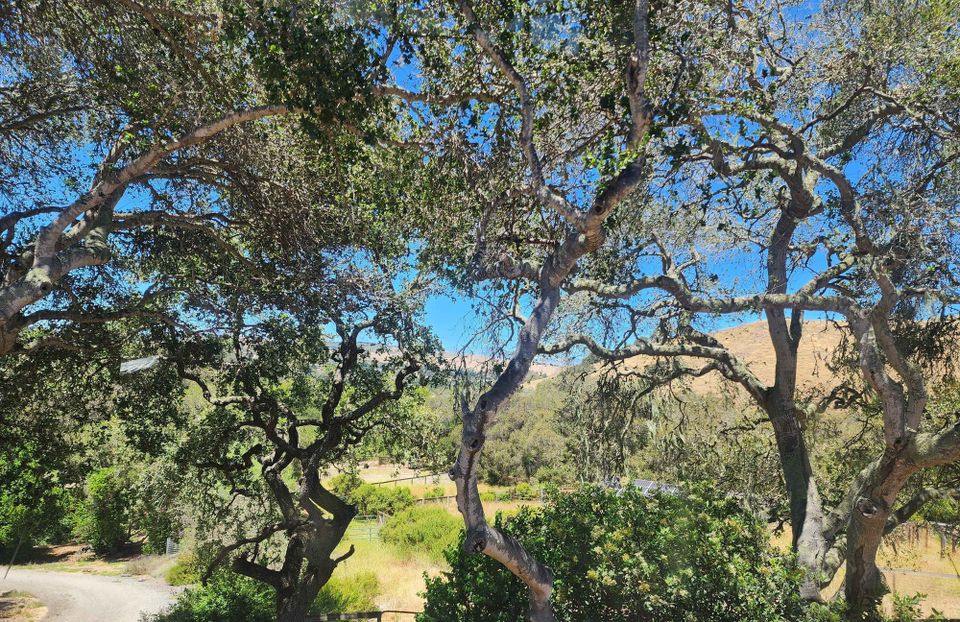
Even after WWII's anti-Japanese craze, what would become Steinbeck Country still attracted many Japanese-Americans to its rich coast and fertile soil, including my own relatives. Although I call Sacramento my home nowadays, the dry, rolling hills and vibrant strawberry fields of Salinas Valley, the lemon trees in my great-grandparents' home, and the salted air of Cannery Row and Fisherman's Wharf make up my childhood memories.
Steinbeck himself does not sit comfortably in my mind. I flipped through his books in Tidal Coffee during one of my day trips to Monterey, and his childhood home is now a restaurant with guided tours and a gift shop, located just a quick walk away from the National Steinbeck Center, a museum dedicated to John Steinbeck and his works. His legacy has a certain mystique and nostalgia for me, but despite the fact that Steinbeck and my family had enemies in common, I could hardly consider someone who was such a fanatic proponent of American militarism in Vietnam an ally, nor can I have much personal respect for someone whose off-page misogyny was recently unearthed in Gwyn Conger Steinbeck's posthumous memoir. But his rendering of Salinas Valley as the Valley of the World draws people from across the globe to some of the parts of California that many in the big cities dismiss as Nowhere, and it's his pen that defines the place that my family's from.
Although Steinbeck did not include any Japanese-American characters in his many works, they're almost always in mine. Opinions on Steinbeck himself are a point of contrast for two Japanese-Americans in the novel I swear I'm writing, and a handful of my characters across different projects have long family ties in Monterey County. Among Steinbeck's strange legacy I suppose you can include inspiring, on some level, stories about queer people of color in speculative fiction.
Cannery Row in Monterey in California is a poem, a stink, a grating noise, a quality of light, a tone, a habit, a nostalgia, a dream. Cannery Row is the gathered and scattered, tin and iron and rust and splintered wood, chipped pavement and weedy lots and junk heaps, sardine canneries of corrugated iron, honky tonks, restaurants and whore houses, and little crowded groceries, and laboratories and flophouses. Its inhabitants are, as the man once said, “whores, pimps, gambler and sons of bitches,” by which he meant Everybody. Had the man looked through another peephole he might have said, “Saints and angels and martyrs and holymen” and he would have meant the same thing.
Cannery Row, John Steinbeck
Member discussion